

You’re home with the kids. Laundry’s piling up. Snacks are being demanded every twenty minutes.
And somewhere in the back of your mind, you’re thinking, “There has to be a way to bring in some extra cash without leaving the house.”
Good news. There is. And you don’t need a fancy degree or some huge startup budget.
You just need a skill, a laptop, and a little bit of hustle during nap time.
Here are five digital skills that can realistically get you to an extra $500 a week. Some of these you can start learning today, for free.
1. Proofreading
I’m starting here because it’s honestly the most underrated skill on this list.
Think about it. Bloggers, students, small business owners, authors… they all write stuff.
And most of them are terrible at catching their own mistakes. That’s where you come in.
Proofreading is just reading through text and fixing grammar, spelling, and punctuation errors. That’s it. You’re not rewriting anything. You’re not adding your own ideas. You’re just polishing.
Here’s why this is perfect for a busy mom. You can do it in short bursts. Got 20 minutes while the baby naps?
That’s enough time to proofread a blog post. Got an hour after bedtime? That’s a whole chapter of someone’s book.
Beginner proofreaders charge around $15 to $25 an hour. Once you get faster and land steady clients, that number climbs fast.
A handful of regular clients sending you a few documents a week can easily get you to that $500 mark.
Where do you find clients? Facebook groups for bloggers, freelance sites like Upwork, or just cold-pitching small business owners on Instagram.
Seriously, just message five small businesses this week and offer to proofread their website copy for free as a trial. Watch what happens.
How Do You Start Proofreading?
Though there isn’t much of a high-profile requirement when it comes to proofreading jobs, basic language skills with an eye for spelling and grammatical mistakes are all it takes.
But while hiring, some employers do look for some previous experience or proofreading certification.
This is why you need to have some sort of formal proofreading learning or practice experience before you even apply for such jobs.
One of the best ways to learn is through Caitlin Pyle’s well-rounded 76-minute FREE workshop that covers all the aspects of proofreading you need to know before diving into this business.
In that FREE workshop, she explains:
- How to get started as a proofreader
- How to make money working from home
- How to find clients
- How to grow your proofreading business
- Whether proofreading is the right fit for you
The workshop is packed with useful information, and it’s completely free to attend.
Caitlin isn’t just another online instructor. She has real experience.
In 2014, Caitlin Pyle made over $43,000 working as a freelance proofreader.
After achieving success herself, she decided to teach others how to build similar careers.
That’s why she created Proofread Anywhere, a comprehensive online training program designed to help beginners learn proofreading properly and start getting clients consistently.
If you’re serious about becoming a freelance proofreader, starting with her free workshop is one of the smartest first steps you can take.
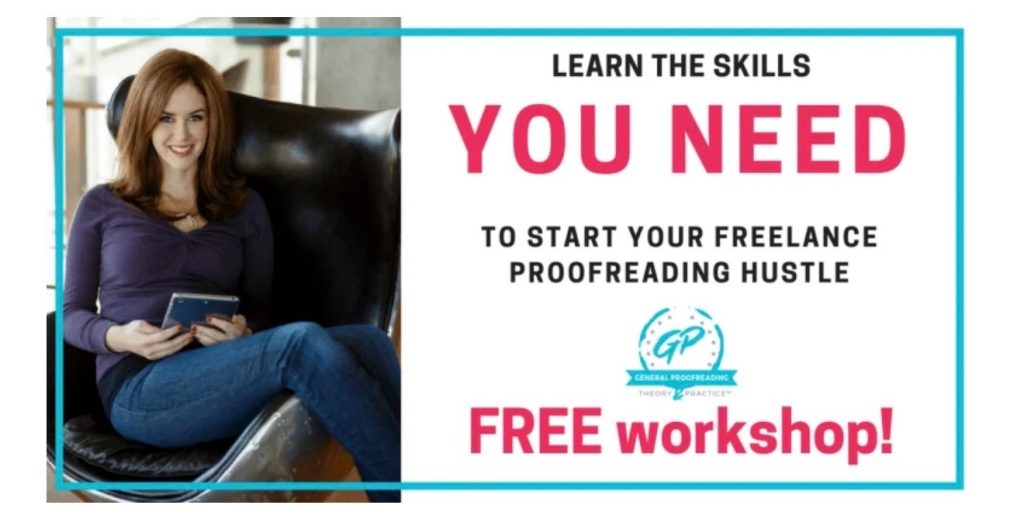
The workshop is pretty informative, and you don’t want to miss it.
Sign Up For Your Free Workshop
2. Virtual Assistance
If you’re already great at keeping your household running smoothly, congrats- you basically already have the skills for this.
A virtual assistant helps business owners with the stuff that eats up their time.

Think emails, scheduling, data entry, social media posting, customer service messages. It’s basically being someone’s right hand, minus the commute.
The beauty of this gig is that it’s flexible. You set your own hours in most cases. Some VAs work 10 hours a week; others work 30. You decide what fits your life.
Rates typically start around $20 an hour for general tasks. Specialized VAs, like ones who handle bookkeeping or social media management, can charge $35 to $50 an hour.
To land your first client, don’t overthink it. Reach out to online coaches, real estate agents, or small e-commerce shops. These folks are drowning in busywork and would love to hand it off.
Websites like Belay, Time Etc, and Fancy Hands hire VAs directly too, which is a nice shortcut if you don’t want to pitch clients yourself right away.
3. Social Media Management
Raise your hand if you spend way too much time scrolling Instagram anyway.

Might as well get paid for it, right?
Small businesses know they need to be on social media, but most of them have zero time or energy to figure it out. That’s your opening.
Social media management means creating content, scheduling posts, responding to comments, and growing a business’s online presence.
You don’t need to be a marketing genius. You need to understand what makes people stop scrolling and pay attention. If you’re someone who already notices what makes a post good versus boring, you’ve got a head start.
This skill pays well because businesses see it as directly tied to sales.
Managing one client’s Instagram and Facebook can bring in $300 to $800 a month, depending on how much work is involved. Land two or three small clients and boom, there’s your $500 a week.
Free tools like Canva and Later make this way easier than it sounds.
Spend a week learning the basics, put together a little portfolio using a fake or your own business page, then start pitching local shops in your area. Local businesses especially need this help and often don’t even know it’s an option.
4. Freelance Writing
If you can string a sentence together and you don’t hate writing, this one’s worth a serious look.
Businesses need blog posts, website copy, email newsletters, product descriptions… the list goes on. And most of them are happy to pay someone else to write it for them.

Now, I know what you’re thinking. “I’m not a professional writer.” Neither was I when I started. Nobody is born knowing how to write for the internet. It’s a learnable skill.
Start by picking a niche you already know something about. Parenting, personal finance, home organization, health, whatever. Writing about stuff you already understand makes the whole process way faster and less painful.
New freelance writers typically start around $30 to $50 per article.
Once you build a portfolio and get some experience under your belt, $100 to $300 per article isn’t unusual. That means landing just two or three clients who need weekly content can easily clear that $500 weekly goal.
Pitch small business blogs directly, check job boards like ProBlogger, or just start writing samples and building a simple portfolio website. Consistency matters way more than talent here. Keep showing up, and you’ll improve fast.
5. Bookkeeping
Numbers person? This one’s for you.
Every single business needs someone to track their income and expenses. Most small business owners hate doing this themselves, and honestly, a lot of them are bad at it. That’s a huge opportunity for you.

Bookkeeping means recording financial transactions, reconciling accounts, and helping business owners understand where their money is actually going.
You don’t need to be an accountant. You just need to be organized and detail-oriented.
There are plenty of online courses that teach bookkeeping basics in just a few weeks. QuickBooks Online even offers certification that a lot of clients look for specifically.
This is one of the higher-paying skills on this list. Bookkeepers typically charge $30 to $60 an hour, sometimes more once they specialize. A couple of small business clients needing monthly bookkeeping can easily bring in that extra $500 a week, sometimes way more.
Find clients through local business Facebook groups, freelance platforms, or by simply asking around your community. Small business owners talk to each other, and word of mouth spreads fast once you do good work.
So, Where Do You Start?
Here’s the truth nobody tells you: you don’t need to master all five of these. Pick the one that sounds the least scary to you, or the one that matches something you’re already decent at.
Start small. Take on one client. Do a great job. Ask for a testimonial. Then take on another client.
That’s literally how every successful work-from-home mom got started. Not with some magic formula, just one small step followed by another.
You’ve got nap times, quiet evenings, and moments in between the chaos.
That’s enough time to build something real. So pick your skill, start learning this week, and watch that extra income start rolling in.