
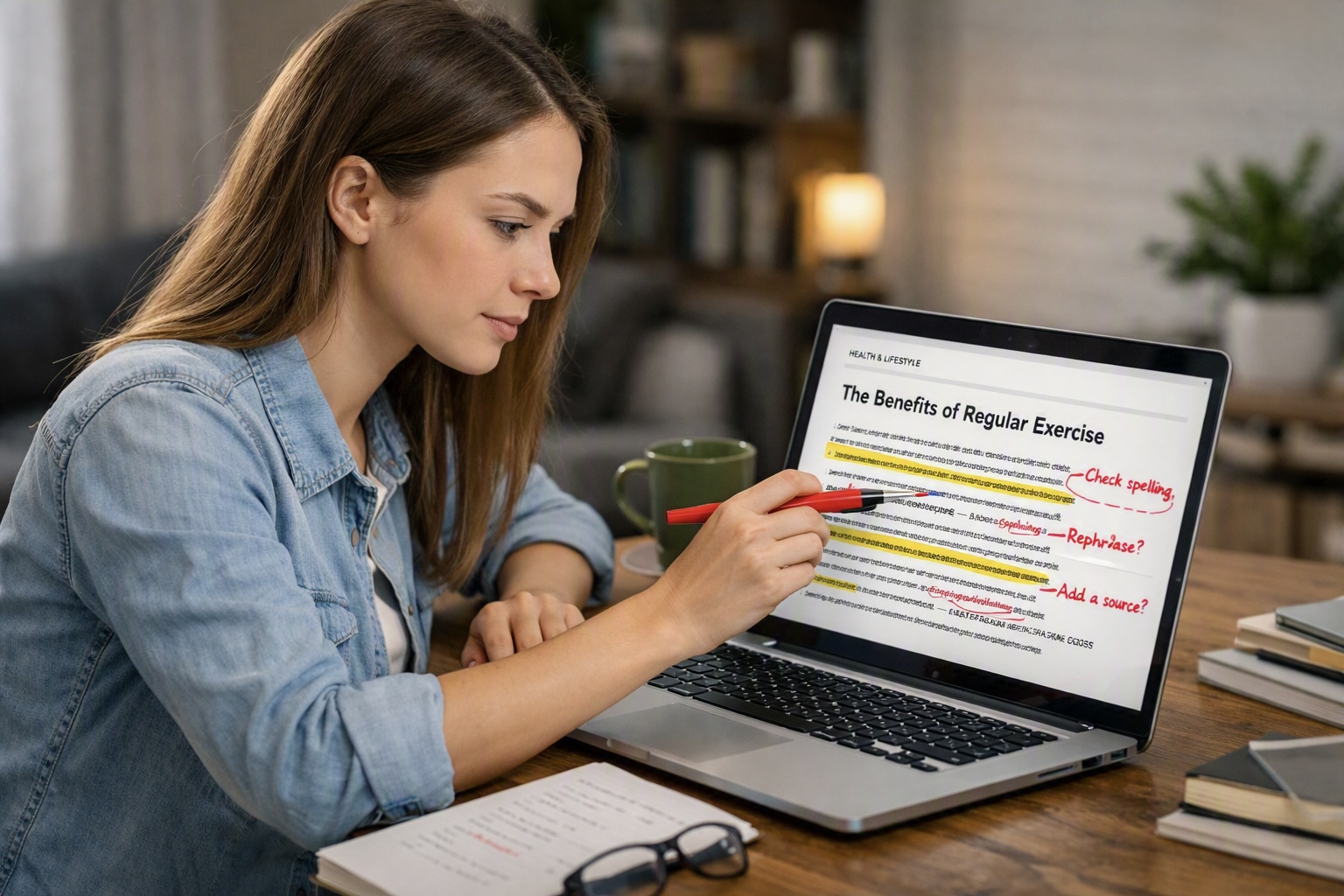
If you have a good eye for mistakes and enjoy working with words, proofreading could be worth looking into.
You do not necessarily need to sit in an office. You can work from home, choose flexible hours, and take on projects that fit your schedule.
And yes, proofreading can pay well once you build your skills, gain experience, and learn how to find good clients.
For women who want a flexible online job, this can be especially attractive. You can work around your family, another job, school, or other responsibilities.
So, what exactly does a proofreader do? And where can you find proofreading jobs you can do from home?
Let’s get into it.
What Is Proofreading?
Proofreading is the process of checking written content for mistakes before it is published or sent to readers.
A proofreader looks for things like spelling mistakes, grammar errors, punctuation problems, incorrect capitalization, typos, and awkward wording.
For example, a writer might finish a 2,000-word blog post but accidentally type “your” instead of “you’re.” A proofreader catches that mistake before the article goes live.
Proofreaders can work on many types of content.
You could proofread blog posts, books, business documents, websites, newsletters, academic papers, social media content, and more.
The job is not about completely rewriting someone’s work. Your main responsibility is to make sure the final version is clean, accurate, and easy to read.
Is Proofreading a High-Paying Job for Women?
Proofreading can be a well-paying career, but it is important to be realistic.
It is not a job where you automatically make thousands of dollars in your first week.
Your income will depend on your experience, the type of content you proofread, how quickly you work, your clients, and how much you charge.
Some proofreaders charge by the word. Others charge by the page, project, or hour.
The good thing is that proofreading has relatively low startup costs. You generally need a computer, reliable internet, strong language skills, and proofreading knowledge.
It can also be flexible.
That flexibility is one reason proofreading can be appealing to women who want to work from home. You can potentially work early in the morning, during school hours, in the evening, or whenever your schedule allows.
Once you become experienced, you can also look for higher-paying clients instead of relying only on low-paying gigs.
How Do I Start Proofreading As A Woman?
One of the best ways to learn is through Caitlin Pyle’s well-rounded 76-minute FREE workshop that covers all the aspects of proofreading you need to know before diving into this business.
In that FREE workshop, she explains:
- How to get started as a proofreader
- How to make money working from home
- How to find clients
- How to grow your proofreading business
- Whether proofreading is the right fit for you
The workshop is packed with useful information, and it’s completely free to attend.
Caitlin isn’t just another online instructor. She has real experience.
In 2014, Caitlin Pyle made over $43,000 working as a freelance proofreader.
After achieving success herself, she decided to teach others how to build similar careers.
That’s why she created Proofread Anywhere, a comprehensive online training program designed to help beginners learn proofreading properly and start getting clients consistently.
If you’re serious about becoming a freelance proofreader, starting with her free workshop is one of the smartest first steps you can take.
The workshop is pretty informative, and you don’t want to miss it.
Sign Up For Your Free Workshop
1. Freelance Proofreading Jobs
Freelancing is one of the most flexible ways to get started as a proofreader.
Instead of working for just one company, you can work with several clients.
A client might hire you to proofread blog posts every week. Another might need help with an ebook. Someone else might need their website content checked before launching.
This gives you the opportunity to build multiple income sources.
Freelance platforms can help you find your first clients. You can create a profile, list your proofreading skills, show examples of your work, and apply for relevant projects.
The downside is that competition can be high.
You may also find lower-paying jobs when you are just starting.
Don’t let that discourage you.
Your first goal should be gaining experience and building a strong reputation. As your skills and reviews improve, you can become more selective about the projects you accept.
2. Proofreading Blog Posts and Website Content
Thousands of businesses publish content online.
They need blog posts, landing pages, newsletters, product descriptions, and website copy.
And businesses do not want embarrassing spelling or grammar mistakes appearing on their websites.
That’s where proofreaders come in.
You can work with bloggers, small businesses, marketing agencies, online stores, and content creators.
This can become particularly attractive if you find a client who publishes content regularly.
Instead of constantly searching for new work, you could have recurring projects every week or month.
You can also specialize.
For example, you might focus on proofreading content for real estate businesses, personal finance websites, beauty brands, travel companies, or small businesses.
Having a niche can make it easier to explain exactly what you offer.
3. Book and Ebook Proofreading
Do you love reading?
Then proofreading books could be an interesting option.
Authors need someone to carefully review their manuscripts before publishing.
A book can contain hundreds of pages. Even a talented writer can miss small errors after spending months working on the same manuscript.
As a proofreader, you can help catch those mistakes.
You may work with independent authors, publishers, or companies that produce books and ebooks.
Book proofreading can take more time than proofreading a short blog post. But larger projects can also mean larger payments.
The key is to understand what the client expects before accepting the job.
Ask about the length of the manuscript, deadline, formatting, style requirements, and exactly what type of proofreading they want.
4. Business Document Proofreading
Businesses create a huge amount of written material.
Think about reports, presentations, proposals, newsletters, employee documents, brochures, emails, and other business communications.
These documents often need to look professional.
A simple typo in an important proposal can make a company look careless.
That’s why businesses are willing to pay people who can carefully review their written materials.
This type of proofreading can be a good option if you are detail-oriented and comfortable working with professional content.
You can approach small businesses directly and offer your services.
You can also connect with marketing agencies and other companies that regularly create written content for their clients.
And because businesses often need content repeatedly, one good client could potentially turn into ongoing work.
5. Academic Proofreading
Students, researchers, and academics produce a lot of written work.
This includes essays, dissertations, research papers, theses, and other documents.
Some people hire proofreaders to help them catch grammar, spelling, punctuation, and formatting mistakes before submitting their work.
If you have strong attention to detail, this could be another area to explore.
However, there is an important distinction.
Proofreading should not mean doing someone’s assignment for them or changing their ideas. Your role should be limited to the services the client is allowed to receive under their school’s or institution’s rules.
If you decide to specialize in academic proofreading, learn the appropriate standards and expectations before accepting projects.
How Much Can You Make as a Proofreader?
There isn’t one fixed salary for everyone.

Your income can vary widely.
A beginner may start with smaller projects while building experience. An experienced proofreader with strong clients and a specialized niche may be able to charge significantly more.
Your pricing also matters.
Charging $10 for a project that takes you three hours is not a sustainable business.
As you become faster and better, you can gradually raise your rates.
You should also think about the value you provide.
A business owner may not simply be paying you to find commas and spelling errors. They are paying for polished content that makes their business look more professional.
That’s valuable.
Tips for Getting Your First Proofreading Client
Getting your first client can feel like the hardest part.
Start by creating a simple professional profile that clearly explains what you do.
You should also have a few samples that demonstrate your skills. If you don’t have paid experience yet, you can create practice samples.
Find a piece of poorly edited writing, make a copy, and demonstrate how you would improve it.
Then start reaching out.
Look at bloggers, small businesses, authors, agencies, and other people who regularly publish written content.
Don’t send the same generic message to everyone.
Take a few minutes to understand what they do and explain how your proofreading service could help.
Also, be patient.
You might send several pitches before someone says yes.
That’s normal.
Is Proofreading Right for You?
Proofreading isn’t for everyone.
You need patience.
You need to be comfortable reading the same sentence more than once. You need to notice tiny details that other people might overlook.
You also need good communication skills because you’ll be working with clients.
But if you enjoy reading, have strong English skills, and want a flexible work-from-home career, proofreading is worth exploring.
You don’t need to quit your current job immediately.
Start small.
Learn the basics. Practice. Take on a few projects. Build your portfolio. Get testimonials. Then gradually work toward better-paying clients.
Final Thoughts
Working from home as a proofreader can give you something many traditional jobs don’t: flexibility.
You can potentially work with clients across the country without commuting to an office.
The five opportunities we covered are freelance proofreading, blog and website proofreading, book and ebook proofreading, business document proofreading, and academic proofreading.
The important thing is not to expect overnight success.
Learn the skill first. Practice it. Understand how to find clients. Then start applying and pitching.
Your first proofreading job may not pay a fortune.
But it could be the experience that helps you land the next one.
And eventually, those small projects can turn into regular clients and a serious work-from-home income.