

You love your grandkids. That is not the problem.
The problem is the pressure. The toy ads. The wish lists. The little face that lights up when you say yes. Before you know it, you have spent $800 and your retirement budget is bleeding.
If this sounds like you, you are not alone. Millions of grandparents in the U.S. spend more than they planned every December. Many do it quietly. Many feel guilty if they don’t.
Here are six steps to help you say no to overspending, without feeling like a Grinch.
1. Set a Hard Number Before You Shop
Most overspending starts with no plan. You walk into a store with a vague idea. You walk out with six bags.
Fix this first. Sit down with a pen and paper. Decide your total Christmas budget for all grandkids combined. Not per child. Total.
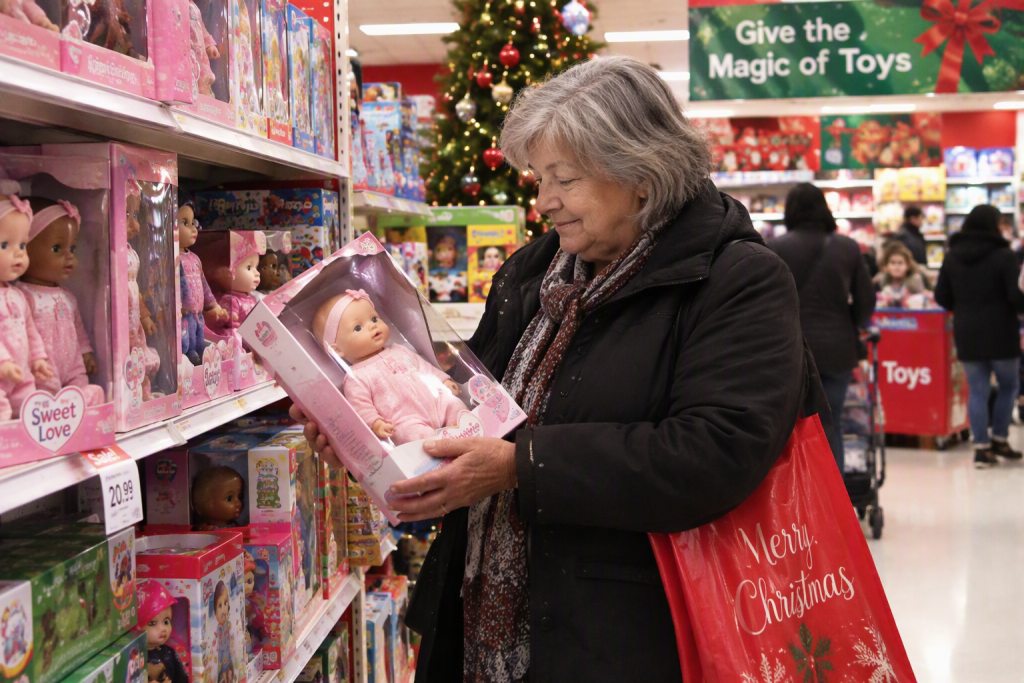
Here is a simple way to find your number:
- Look at your monthly income after bills.
- Decide how much you can give without touching savings.
- Pick a number that feels almost too small.
Now divide it by the number of grandkids. That is your limit per child.
For example, $400 total across four grandkids is $100 each. Done. No debate.
Write the number down. Put it on your fridge. A written number is harder to break than a number in your head.
If you live on a fixed income, be extra strict here. Social Security does not stretch when the credit card bill arrives in January.
2. Start a Christmas Account Today
Here is where many women get caught. They wait until December. Then they put everything on a credit card.
Credit card interest in the U.S. is high. Many cards charge over 20%. A $500 gift spree can cost you far more by spring.
Instead, open a small savings account just for gifts. Many banks let you name the account. Call it “Grandkids Christmas.”
Then work backward. If your budget is $400, and you have three months left, save about $133 a month. Set up an automatic transfer. You will not feel it.
Cash in hand makes you a better shopper. When the money runs out, the shopping stops. That is not a failure. That is a system.
If you can’t save the full amount, lower the budget. Do not raise the credit limit.
3. Use Simple Words to Say No
This is the hard part. Saying no feels mean. It isn’t. It is honest.
Grandkids ask for things. Their parents sometimes ask too. A teenager may hint at a $300 gadget. A little one may point at everything in the toy aisle.
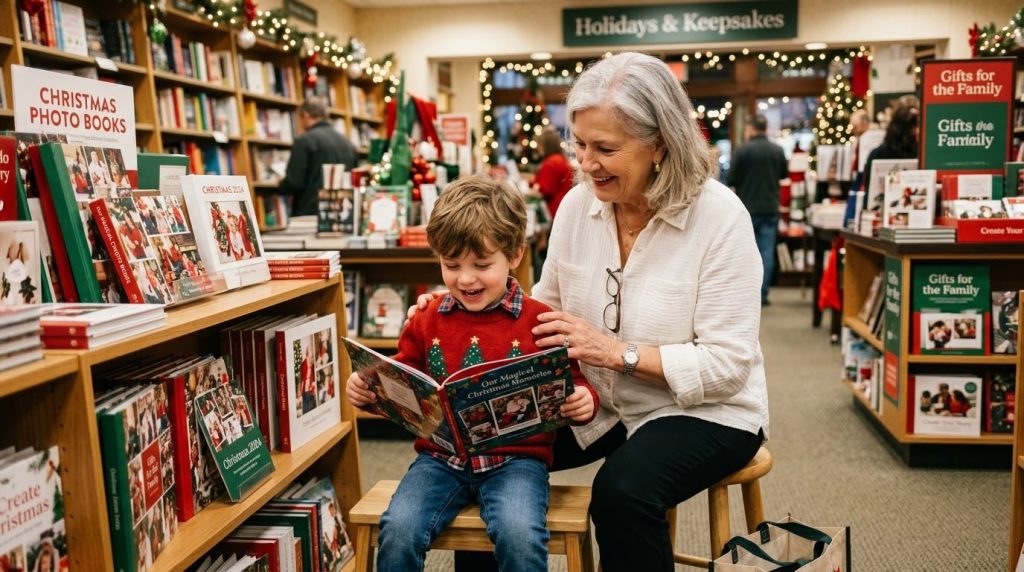
You do not need a long speech. Short and warm works best. Try these:
- “That’s a lovely idea. This year, Grandma has a set budget.”
- “I can’t do that one, but I can do something special.”
- “Santa handles the big gifts. I handle the hugs and the cookies.”
Notice the pattern. You say a kind word first. Then you say your limit. Then you offer something else.
Don’t over-explain. Don’t apologize five times. The more you explain, the more room you give for debate.
Say it once. Say it calmly. Smile. Move on.
4. Talk to the Parents Early
Many grandparents skip this step. It is a big mistake.
Call or text your adult children in October. Ask what the kids truly need. Ask what the family already plans to buy. This stops double gifts and wasted money.
You can also say this: “I’m keeping my Christmas budget to $100 per child this year. Can you help me pick the best gift?”
Most parents will say thank you. They know money is tight for everyone. Many feel relieved that someone said it first.
Here are a few ideas to suggest to the family:
- Draw names. Each adult buys for one grandchild, not all.
- Set a family cap. Everyone agrees on a dollar limit.
- Do a group gift. Several relatives chip in for one big item.
A group gift is a smart trick. A $150 bike from three people costs each person just $50. The child gets something great. Your budget stays safe.
Also, ask the parents to back you up. If a child begs for more, a united front ends the debate fast.
5. Give Time, Not Just Things
Here is something worth knowing. Kids get a lot of stuff at Christmas. By January, much of it sits in a corner.
But a memory? That stays.
Think about gifts that cost little and mean a lot:
- A baking day. Make your famous cookies together. Give them the recipe card.
- A movie night at your house. Popcorn, blankets, and a silly film.
- A coupon book. “One sleepover.” “One trip for ice cream.” “One day at the park.”
- A story gift. Record yourself reading a favorite book. Kids love hearing Grandma’s voice.
- A photo book. Fill it with pictures of the two of you.
These gifts cost under $25. Yet they often beat a plastic toy.
Experiences also do something stores can’t. They build the bond you want. And they give your grandchild something to look forward to.
So ask yourself: What do I want them to remember? A box? Or a day with you?
6. Shop Smart and Stay Away From Triggers
Even with a plan, temptation is real. Stores are built to make you spend. Online ads follow you around. “Limited time” sales create panic.
Protect yourself with a few simple rules.
Make a list and stick to it. Write down each child and each gift. If it isn’t on the list, it doesn’t go in the cart.
Wait 24 hours. See something you didn’t plan for? Leave it. If you still want it tomorrow, think again. Most of the time, the urge fades.
Skip the “just one more thing.” Small extras add up fast. Five $12 stocking stuffers is $60.
Leave your card at home. Take cash in an envelope. When the envelope is empty, you are done.
Unsubscribe from store emails. Every “50% off” message is a nudge to spend. Click delete, or better, unsubscribe.
Also, don’t shop when you are tired or sad. Emotions drive spending. A calm shopper makes smarter choices.
And please, avoid buying out of guilt. If you feel guilty, pause. Ask yourself: “Am I buying this for them, or to feel better about myself?”
A Quick Word About Guilt
Let’s be honest. The guilt is the real enemy here.
Many grandmothers feel they must make up for something. Maybe they live far away. Maybe they couldn’t give their own kids much. Maybe they just want to be the “fun grandma.”
But think about this. If you overspend now, you may need help later. Your children may have to step in. That is the last thing you want for them.
The best gift you can give your family is your financial independence. It tells them: “I’m okay. You don’t have to worry about me.”
That is real love. It is also real strength.
Your Action Plan for This Week
Don’t just read this and move on. Take action now. Here is a short checklist:
- Write down your total Christmas budget.
- Open a gift savings account or set aside an envelope.
- List each grandchild and a gift idea under $100.
- Call your adult children and share your plan.
- Practice one “kind no” sentence out loud.
That’s it. Five small steps. You can finish most of them in one afternoon.
Final Thoughts
Christmas is about connection. Not receipts.
Your grandkids want you. Your laugh. Your hugs. Your stories. A $200 toy will be old news by February. But the afternoon you spent baking cookies together? That stays for life.
So this year, give with care and with a plan. Say no when you need to. Say it kindly. Say it firmly.
You are not being cheap. You are being wise.
And in January, when the bills are calm and your account is safe, you will feel something wonderful: peace.
That is a gift you give yourself. And your family will thank you for it.