
With its ability to generate over 2000 high-quality SEO content at a time, and pass AI content detection, Content at Scale has become the game changer in terms of using AI to generate content.
In fact, I ranked it as one of the best AI copywriting tools from over 15 of them I tested.
But it’s not glitz and glam as Content at Scale is more expensive compared to Jasper AI and ChatGPT which many use.
In this Content at Scale review, I will share the findings of my test to help you decide if this AI SEO writing tool that writes like humans are for you.
Top Pick

Content at Scale
Write 2000+ high-quality SEO content that 100% passes AI content detection test
Don’t need to invest in any SEO tool for content optimization. Publish directly to your WordPress blog
And before I jump into that, let me bring your attention to this recent survey Content at Scale conducted with 125 marketers on how they use the tool and the results they get.
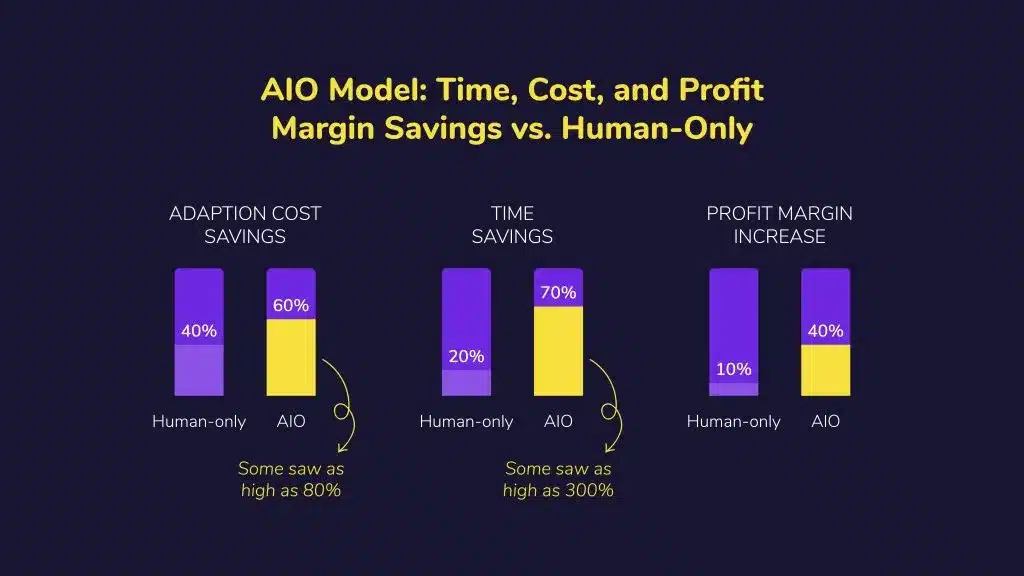
The highlight of the survey is this:
- Average cost saving of 60%
- Average time saving of 70%
- Profit margin increase of 40%
The summary of the survey shows that Content at Scale according to 125 marketers that use it saves 60% of the money they spend on hiring freelancers. Another is that it saves them 70% of the time they invest in creating high-quality SEO content, and finally, they saw a 40% increase in profit their content generated.
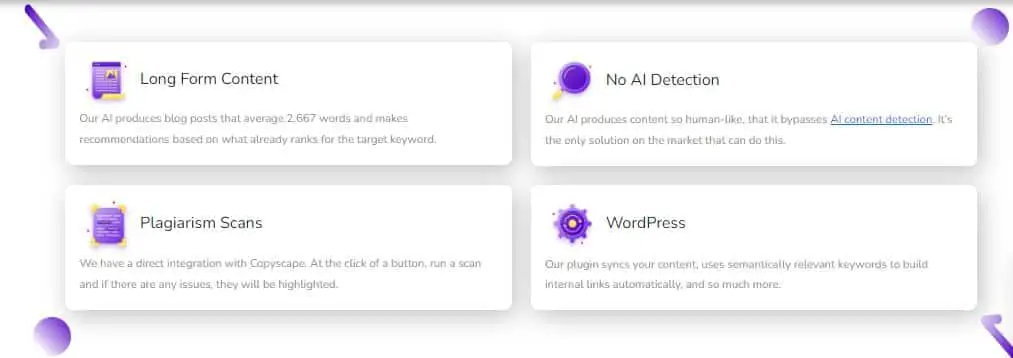
Below is a screenshot of some features that make Content at Scale a powerhouse:
Pricing Plans Of Content at Scale
It has 4 pricing plans:
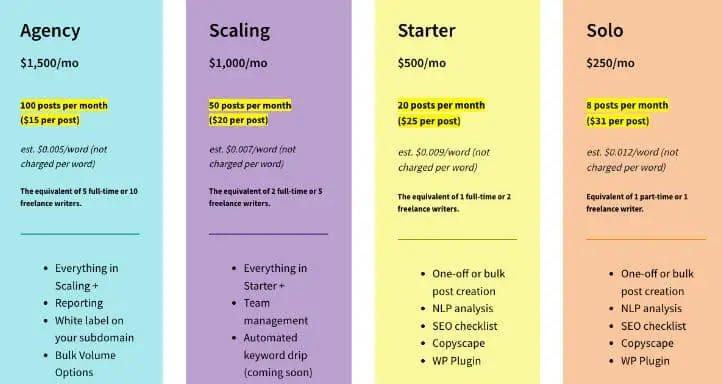
Solo Plan: $250/month ( write 8 blog posts at $31.25/month)
Starter Plan: $500/month (write 20 blog posts per month at $25/post)
Scaling Plan: $1000/month (write 50 blog posts per month at $20/post)
Agency Plan: $1500 (write 100 blog posts that pass AI content detection test at $15/post)
Pros & Cons Of Content at Scale
Pros – What I Like About Content at Scale
- It has a WordPress Plugin which serves as a workflow to publish content on your WordPress blog directly from Content at Scale
- Generates high-quality SEO content that shows 0% AI content. This is one of the things that fascinates me about CaS especially now Google is indirectly cracking down on AI content
- Has its own free AI content detection tool for you to confirm that the content it generates is 100% human written
- Has an SEO checklist and offers core features that many SEO tools like Surfer have. So you don’t have to subscribe to any SEO tool for content optimization and great user experience
Cons – What I Don’t Like About Content at Scale
- It has no free trial
- No discount for an annual subscription
- Pricing plans look expensive for a beginner on a tight budget
- You can’t write short-form content like YouTube video descriptions, LinkedIn bios, Instagram photo captions, etc
A Tour Of Content at Scale Dashboard
After I signed up and create a blog post, I have a dashboard that look like this:

The interesting thing here is that Content at Scale shows the cost and hours I saved if I were to hire a writer or write it myself. I also see the number of words I generated and the number of posts I created. I guess the aim of this is to show how CaS reduces the cost of investment you make in quality content. Now you can relate to the survey I linked above on how 125 marketers use Content at Scale.
My findings using Content at Scale to write a blog post
Let me walk you through on how I used it to write a blog post.
From my dashboard, I clicked on Create a New Project.
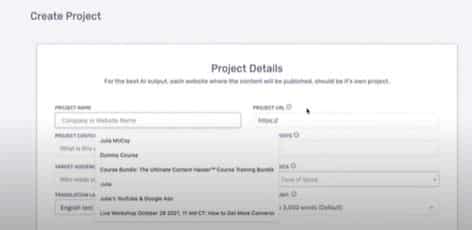
Then entered:
The name of my project
Project URL – which is the URL of my website
Project context – which is the topic I want to cover and rank my website for
Number of posts I want to publish on the site
My target audience
Tone of words of my site – I choose one from the drop-down menu
Translation language – I choose English
Word count – Content at Scale has it at 2000 – 3000 words by default. Use the drop-down menu to make a choice
The essence of putting all this information is for CaS to generate high-quality content that will add value to your audience.
Next is to click Create Project.
I’m now on a page where I can create SEO content.
There is space to enter the keyword I want to rank for.
Let’s say my website is about Web design. So I entered ‘ improve user experience’.
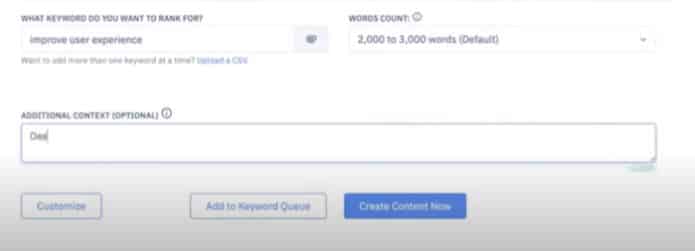
Next is to enter additional text about the topic to help CaS dive deep and generate quality content. After which I set my word count.
There are specific features I discovered here that other AI content tools like Jasper and ChatGPT lack.
They are:
Upload CSV – with it, you can upload multiple keywords you selected from your keyword research tool and export them to a spreadsheet. But the thing is that CaS will treat each of the keywords as separate blog posts.
In that case, you have to use the Add to Keyword Queue feature so that it can generate content for each of the keywords one after another. To avoid getting confused, I didn’t upload keywords via CSV and I suggest you do the same.
There is also an option to customize keywords. I checked it out, and it is just for you to create a list of keywords that are unique and different from what your keyword tool generated but also relate to the topic you want to write.
After all these settings, I clicked Create Content Now and allowed CaS to do the magic and generate 2000+ high-quality SEO content.
It took time to generate the content. That can be a con to you but for me, it isn’t because creating high-quality content takes time. Think of it as your freelance writer taking hours to brainstorm, research, and in some cases get the opinion of subject-matter experts to deliver high-quality content.
Analyzing the blog post Content at Scale generated
After about 10 minutes, Content at Scale generates over 2200 words for my target keyword.
Look at the screenshot below, you could see that it also generated a meta description and a URL slug. So you don’t have to waste time thinking of the best meta description that will increase your Click-Through-Rate, or how to structure your URL slug.

It also shows me the number of words, paragraphs, headings, and media ( images, video, GIF, etc.) added to the content.
Beside it are Optimization and Brief tabs:
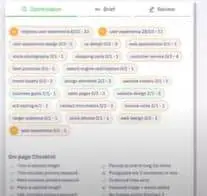
Optimization: It shows you keywords that influence ranking and the number of times you should include them in your content.
Once I place my cursor where I want it, I select the keyword to include and it automatically enters my content. Under the optimization tab, there is an on-page SEO checklist.
You are to optimize your content so that it ticks all the boxes. But in my own case, I think I tick all the boxes to avoid overdoing things.
Remember this is AI and you can always use your own instinct to decide what makes sense to your readers. I see this optimization feature as part of what you get in Surfer SEO, Semrush, and other SEO tools. So with Content at Scale, you save the money you’d inves